Robert Eggers Reportedly Plans Romeo and Juliet Adaptation After Taking a Break From Horror
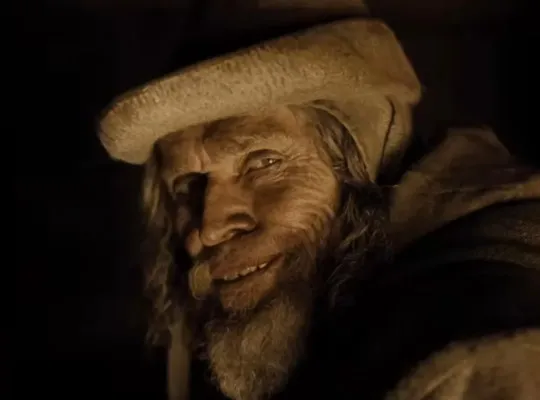
Robert Eggers, the acclaimed filmmaker behind The Witch, The Lighthouse, and Nosferatu, is reportedly considering a major change in his career. After years of exploring dark historical settings, supernatural mysteries, and unsettling characters, the director wants to take a break from horror and experiment with different genres.
One of the projects currently attracting his attention is a new adaptation of William Shakespeare's Romeo and Juliet. According to recent reports, Eggers has entered preliminary discussions with Focus Features about bringing the famous tragedy to the big screen.
Although the project has not been officially announced, the possibility of Eggers directing a Shakespeare adaptation represents an intriguing departure from the material that established his reputation.
Robert Eggers Wants to Explore Stories Beyond Horror
Eggers discussed his creative ambitions during a recent meeting with fans in Mexico.
The director explained that he does not want his entire career to become associated exclusively with horror movies.
Although his previous films have earned considerable acclaim, Eggers appears increasingly interested in exploring subjects that fall outside his established cinematic territory.
His comments suggest that the decision is not motivated by dissatisfaction with the horror genre itself.
Instead, the filmmaker wants greater creative variety and the freedom to pursue stories that challenge him in different ways.
Eggers has built a distinctive reputation through his attention to historical detail, atmospheric filmmaking, and unconventional storytelling.
Those qualities could remain central to his work even if he begins directing films that are not traditionally classified as horror.
The filmmaker has not suggested that he intends to abandon the genre permanently.
Rather, he appears to be considering a temporary change in direction after spending much of his career developing dark and psychologically demanding stories.
Why Eggers Is Considering Romeo and Juliet
According to the latest report, Eggers began developing another horror screenplay after completing work on his upcoming film Werwulf.
However, the new material reportedly became so dark that he started reconsidering whether he wanted to continue working in the same creative territory.
The experience encouraged him to explore alternative projects.
One possibility that emerged was a new cinematic interpretation of Romeo and Juliet, William Shakespeare's famous tragedy about two young people whose relationship is complicated by a longstanding conflict between their families.
The story has been adapted for film, television, theater, and other media numerous times.
Its combination of personal relationships, family rivalries, social expectations, and tragic consequences has made it one of Shakespeare's most enduring works.
For Eggers, the material could provide an opportunity to explore emotional and historical themes without relying on the supernatural elements that have defined several of his previous productions.
However, his interest in the play does not mean that the movie has received an official production commitment.
Discussions are reportedly underway, but the project remains in the early stages of development.
Focus Features Is Reportedly in Talks With the Director
Focus Features could play an important role in bringing Eggers' proposed Romeo and Juliet adaptation to the screen.
According to the report, the filmmaker is already discussing the possibility of developing the movie with the studio.
Focus Features has previously been associated with several of Eggers' projects, making a potential new collaboration a natural possibility.
The studio distributed The Northman internationally in certain markets and was involved with the release of Nosferatu.
Its history of supporting distinctive filmmaker-driven productions could make it a suitable partner for an unconventional Shakespeare adaptation.
However, the reported negotiations have not resulted in a publicly confirmed production announcement.
No screenplay, cast, filming schedule, or release date has been revealed.
It is also unknown whether Eggers intends to write the adaptation himself or collaborate with another screenwriter.
The director's approach to Shakespeare's original text remains equally uncertain.
The Director Previously Considered Other Classic Horror Stories
During his conversation with fans, Eggers also mentioned two other well-known properties: The Mummy and The Phantom of the Opera.
Both stories have extensive cinematic histories and could potentially suit the director's interest in historical settings and gothic atmosphere.
The Mummy has inspired numerous adaptations, ranging from traditional horror movies to large-scale adventure productions.
The Phantom of the Opera, based on Gaston Leroux's novel, has similarly appeared in multiple films and theatrical productions.
Its themes of obsession, isolation, artistic ambition, and tragedy could provide substantial material for a filmmaker interested in psychologically complex characters.
However, Eggers reportedly suggested that he does not currently feel compelled to pursue these projects.
His comments indicate that he is more interested in moving away from familiar horror territory than immediately committing to another established gothic property.
Neither The Mummy nor The Phantom of the Opera has been announced as an upcoming Eggers production.
For now, they remain examples of stories he has considered rather than confirmed additions to his filmography.
Werwulf Will Be His Next Horror Movie
Before potentially changing genres, Eggers is preparing to release another historical horror film.
Werwulf is scheduled to arrive in theaters on December 25, 2026.
The movie takes place in 14th-century England and follows a man and his family as they confront a mysterious threat.
The production continues Eggers' established interest in historical environments, folklore, and the relationship between human beliefs and extraordinary events.
Aaron Taylor-Johnson, Lily-Rose Depp, and Willem Dafoe are among the film's leading performers.
All three actors have experience working in ambitious dramatic productions, while Depp and Dafoe previously appeared in Eggers' Nosferatu.
The medieval setting also reflects the director's fascination with recreating earlier historical periods through detailed costumes, production design, and language.
Werwulf therefore appears to represent a continuation of the filmmaking style that has defined much of his career.
However, Eggers' recent comments suggest that the project could be followed by something considerably different.
Robert Eggers Became Famous With The Witch
Eggers made his feature directorial debut with The Witch, released in 2015.
Set in 17th-century New England, the film follows a Puritan family confronting increasingly unsettling circumstances after becoming isolated from their community.
The movie attracted attention for its meticulous historical detail, atmospheric cinematography, and unconventional approach to horror.
Rather than relying primarily on familiar genre techniques, Eggers emphasized religious anxiety, family relationships, and the psychological effects of isolation.
The film also helped introduce Anya Taylor-Joy to a wider international audience.
Its critical success established Eggers as an important emerging filmmaker and demonstrated his ability to create distinctive cinematic experiences with carefully researched historical settings.
The Witch remains an important reference point for understanding his approach to storytelling.
Even when exploring supernatural material, Eggers places considerable emphasis on the cultural beliefs and social structures surrounding his characters.
Those interests could potentially translate into a historical adaptation of Shakespeare.
The Lighthouse Demonstrated His Unconventional Style
Eggers followed The Witch with The Lighthouse in 2019.
Starring Robert Pattinson and Willem Dafoe, the film centers on two lighthouse keepers whose isolated working environment becomes increasingly difficult.
Shot in black and white and presented in an unusual aspect ratio, the movie attracted attention for its striking visual style and demanding performances.
The Lighthouse also demonstrated Eggers' willingness to experiment with narrative structure and audience expectations.
Its combination of psychological drama, maritime mythology, and surreal imagery helped distinguish it from conventional horror productions.
The film received widespread critical recognition and strengthened Eggers' reputation as a director with a highly individual creative identity.
For a filmmaker considering a Shakespeare adaptation, that experience could be particularly relevant.
Both The Lighthouse and Shakespeare's plays place considerable emphasis on dialogue, character relationships, and dramatic conflict.
However, there is no indication that Eggers intends to reproduce the visual or narrative techniques of The Lighthouse in Romeo and Juliet.
The Northman Proved Eggers Could Work Outside Traditional Horror
Although Eggers is closely associated with horror, his filmography already includes a major project outside the genre.
Released in 2022, The Northman is a historical action drama inspired by Scandinavian legends.
The film stars Alexander Skarsgård as a Viking prince pursuing a deeply personal objective.
Its story combines historical research, mythology, and dramatic conflict.
The Northman demonstrated Eggers' ability to work with larger budgets and more elaborate action sequences while preserving his distinctive approach to world-building.
The movie also featured performances by Nicole Kidman, Anya Taylor-Joy, Willem Dafoe, and Ethan Hawke.
Although it contained dark and unsettling elements, the production was not structured as a conventional horror film.
This experience suggests that Eggers' interest in exploring other genres is not entirely new.
A Romeo and Juliet adaptation would nevertheless represent another significant step, particularly if the filmmaker chooses to emphasize the story's romantic and dramatic elements.
Nosferatu Reinforced His Reputation as a Gothic Filmmaker
Eggers returned to gothic horror with Nosferatu, released in 2024.
The film reimagined the influential vampire story previously adapted by F. W. Murnau in 1922 and Werner Herzog in 1979.
Starring Lily-Rose Depp, Nicholas Hoult, Bill Skarsgård, Willem Dafoe, and Aaron Taylor-Johnson, the production attracted attention for its elaborate period design and atmospheric visual storytelling.
Nosferatu demonstrated Eggers' continuing fascination with European folklore and historical supernatural narratives.
The movie also reinforced his reputation for creating carefully constructed cinematic worlds.
Its success helped establish the director as one of the most recognizable contemporary filmmakers working with gothic material.
However, the experience of developing another dark historical production may also have contributed to his desire for creative variety.
His recent comments suggest that he wants to avoid becoming permanently associated with a single type of story.
What Could Robert Eggers Bring to Shakespeare's Tragedy?
A Romeo and Juliet adaptation directed by Eggers could potentially offer a distinctive interpretation of Shakespeare's work.
The filmmaker is known for carefully researching the historical periods in which his stories take place.
That approach might be particularly interesting for a production set in Renaissance Italy.
His experience with period costumes, architecture, social customs, and historical dialogue could help establish a convincing environment for the story.
Eggers also frequently explores the influence of social expectations and cultural traditions on individual characters.
Those themes are central to Romeo and Juliet, where the conflict between two families shapes the protagonists' circumstances.
A new adaptation could examine the social pressures surrounding the characters while preserving the emotional foundation of Shakespeare's play.
However, these possibilities remain speculative.
Eggers has not revealed whether he would retain the original historical setting, reinterpret the story in another period, or develop a more experimental adaptation.
The film's tone and visual identity will remain unknown until the project moves further into development.
Romeo and Juliet Has a Long History on Screen
Shakespeare's Romeo and Juliet has inspired numerous cinematic adaptations.
Franco Zeffirelli directed a celebrated version in 1968, presenting the story through an elaborate historical production.
Baz Luhrmann later offered a contemporary reinterpretation with Romeo + Juliet in 1996.
That film starred Leonardo DiCaprio and Claire Danes and combined Shakespeare's dialogue with a modern visual setting.
Other adaptations have approached the material through different periods, genres, and creative styles.
The enduring popularity of the story demonstrates its flexibility.
Each new filmmaker has an opportunity to explore the familiar characters through a different perspective.
Eggers' established interest in historical authenticity and psychologically complex storytelling could make his interpretation particularly distinctive.
However, the director has not yet committed publicly to a specific approach.
When Could Robert Eggers' Romeo and Juliet Be Released?
There is currently no official release date for the proposed Romeo and Juliet adaptation.
The project is reportedly being discussed with Focus Features, but no formal production announcement has been made.
Eggers' immediate priority remains Werwulf, which is scheduled for release on December 25, 2026.
Any potential Shakespeare adaptation would likely depend on the completion of development arrangements, including a screenplay, financing, and casting.
The director has also not confirmed whether Romeo and Juliet will definitely become his next feature film.
For now, it should be regarded as a possible future project rather than a guaranteed production.
Robert Eggers Is Ready for a New Creative Challenge
Robert Eggers' latest comments suggest that the filmmaker is preparing to explore a different direction after establishing himself through some of the most distinctive horror films of the past decade.
The director has expressed a desire to avoid limiting his career to dark stories and supernatural themes.
Although he remains interested in horror, he wants the freedom to pursue other genres and creative challenges.
A new adaptation of Romeo and Juliet could provide that opportunity.
The reported discussions with Focus Features suggest that the idea has progressed beyond casual speculation, although the film has not been officially approved.
Meanwhile, Werwulf remains his next scheduled theatrical release, continuing his fascination with historical horror.
Whether Eggers ultimately directs Shakespeare's famous tragedy or chooses another project, his comments indicate that audiences may soon encounter a different side of his filmmaking.
For now, Romeo and Juliet remains an intriguing possibility that could mark the beginning of a new creative chapter for one of contemporary cinema's most distinctive directors.
Diğer haberler:

Yorumlar 0