Filming Wraps on New Screen Adaptation of Alexander Pushkin's Classic Fairy Tale
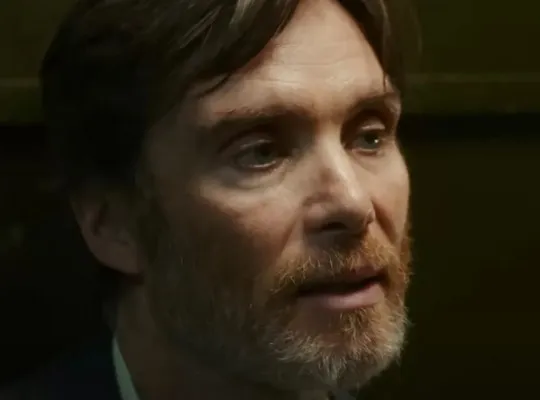
Principal photography has officially concluded on The Tale of the Sleeping Princess and the Seven Knights, a new fantasy film inspired by the classic literary work of Alexander Pushkin.
Produced by the Andreasyan Brothers Film Company in collaboration with the Russian television network TNT, the project will bring the legendary fairy tale to modern cinema audiences. One of its most ambitious production achievements is an enormous indoor forest set, described by the filmmakers as the largest of its kind in Russian cinema history.
With filming now complete, the adaptation is moving into the next phase of production.
A Classic Russian Fairy Tale Returns to the Big Screen
Alexander Pushkin's fairy tales occupy a special place in Russian literature and have inspired generations of readers, filmmakers, composers, and illustrators.
The new adaptation draws upon The Tale of the Dead Princess and the Seven Knights, a narrative poem written by Pushkin in 1833.
The original work combines elements of European folklore with distinctive Russian literary traditions, creating a recognizable story enriched by poetic language, traditional characters, and themes of loyalty, kindness, and jealousy.
The upcoming film offers another opportunity to introduce Pushkin's literary heritage to contemporary audiences through the possibilities of modern fantasy filmmaking.
Unlike earlier illustrated and animated interpretations, a contemporary live-action production can explore the fairy-tale environment through elaborate physical scenery, costumes, cinematography, and visual effects.
What Is the New Fairy Tale About?
The story follows a princess whose peaceful existence is disrupted by her jealous stepmother after a magical mirror reveals that the young woman has surpassed the queen in beauty.
Forced to leave the royal court, the princess discovers sanctuary in a remote forest, where seven brave knights offer her protection.
Meanwhile, Prince Yelisei embarks on a challenging journey to find his missing bride.
The narrative brings together two interconnected adventures, combining the princess's search for safety with the prince's determination to reunite with her.
These familiar elements form the foundation of a story that has remained popular for nearly two centuries.
An Enormous Forest Set Was Built for the Production
One of the most remarkable aspects of the new adaptation is its practical production design.
A specially constructed 3,000-square-meter soundstage at the Metmash film production facility housed an elaborate forest environment used during filming.
The production team claims that it is the largest artificial forest ever created for a domestic Russian film.
Building such an extensive physical environment represents an ambitious approach to fantasy filmmaking, particularly when digital environments have become increasingly common.
A practical set offers filmmakers greater control over lighting, camera movement, and environmental consistency.
It also allows performers to interact naturally with their surroundings rather than relying entirely on digitally generated scenery.
For a fairy tale in which the forest occupies an important narrative role, the decision to construct an extensive physical environment could contribute significantly to the movie's visual identity.
The Importance of the Forest in Pushkin's Story
In traditional folklore, forests frequently represent places of transformation, uncertainty, and discovery.
Characters often enter these environments after leaving familiar surroundings, encountering unexpected challenges and forming new relationships.
Pushkin's fairy tale follows this established storytelling tradition.
The forest provides a contrast to the royal court, replacing its formal atmosphere and complicated relationships with a setting governed by different expectations.
It becomes a place where the protagonist discovers that kindness and loyalty can exist beyond the boundaries of her previous life.
Recreating such an environment for the big screen involves more than constructing trees and woodland paths.
Production designers must also establish a sense of atmosphere that reflects the emotional development of the story.
Lighting, textures, colors, and the arrangement of scenery can all influence how audiences perceive the fictional world.
The scale of the newly constructed set suggests that the filmmakers consider this environment an important part of their adaptation.
The Connection Between Pushkin's Fairy Tale and Snow White
International audiences may recognize similarities between Pushkin's literary work and the European fairy tale of Snow White.
Both stories feature a jealous queen, a magical mirror, a young princess forced to leave her home, and a group of protective companions.
However, Pushkin's interpretation possesses its own cultural identity.
Instead of the seven dwarfs associated with the Brothers Grimm version, the Russian fairy tale introduces seven heroic knights, traditionally known as bogatyrs.
These characters have deep roots in Russian folklore and epic storytelling.
Bogatyrs are commonly associated with courage, honor, generosity, and the protection of others.
Prince Yelisei also occupies a distinctive role in Pushkin's narrative, embarking on his own journey rather than appearing only near the conclusion.
These differences distinguish the Russian literary adaptation from more familiar Western interpretations of the same folkloric tradition.
For international viewers, the upcoming film could provide an interesting opportunity to discover another cultural interpretation of these recognizable narrative elements.
Pushkin's Enduring Influence on Cinema
Alexander Pushkin remains one of the most influential figures in Russian literature.
His poems, novels, dramatic works, and fairy tales have inspired numerous adaptations across cinema, television, opera, ballet, and animation.
Works such as Ruslan and Ludmila, The Tale of Tsar Saltan, and The Golden Cockerel have become important parts of the country's cultural heritage.
Pushkin's fairy tales frequently combine accessible storytelling with imaginative settings and memorable characters.
Their narrative structure also makes them particularly suitable for cinematic adaptation.
Magical objects, extraordinary journeys, royal settings, and encounters with mysterious figures provide filmmakers with opportunities to create visually distinctive productions.
At the same time, their underlying themes remain recognizable to modern audiences.
Questions of loyalty, generosity, ambition, and personal integrity continue to give these stories relevance beyond their original historical context.
Earlier Adaptations of the Sleeping Princess
The new movie is not the first attempt to bring Pushkin's fairy tale to the screen.
One of its best-known adaptations is the Soviet animated film The Tale of the Dead Princess and the Seven Knights, released in 1951.
Directed by Ivan Ivanov-Vano and produced by Soyuzmultfilm, the animated feature became part of a celebrated tradition of adapting classic literary fairy tales.
Its visual approach drew upon traditional illustration and Russian artistic influences.
The production helped introduce Pushkin's story to generations of younger viewers and remains an important example of Soviet animation.
A contemporary live-action adaptation faces a different creative challenge.
Rather than reproducing the appearance of traditional animation, the filmmakers have the opportunity to construct a physical environment that audiences can experience through modern cinematography.
The contrast between historical illustrations, classic animation, and contemporary fantasy filmmaking demonstrates how the same literary material can inspire significantly different artistic interpretations.
The Continuing Popularity of Fairy-Tale Movies
Fairy-tale adaptations remain an important part of family-oriented cinema.
Familiar literary properties offer audiences recognizable characters and stories while providing filmmakers with opportunities to experiment with visual presentation.
In recent years, Russian cinema has continued exploring traditional folklore and classic children's literature through large-scale fantasy productions.
These movies often combine adventure, humor, magical environments, and recognizable cultural references.
Their appeal can extend across generations, attracting both younger audiences discovering the stories for the first time and older viewers who remember previous interpretations.
Pushkin's fairy tales are particularly well suited to this approach because of their longstanding cultural significance.
However, adapting a familiar story also creates expectations.
Filmmakers must balance respect for the original material with the need to create a cinematic experience that feels engaging to modern viewers.
The eventual reception of the new Sleeping Princess adaptation will depend partly on how successfully it achieves that balance.
What Happens After Filming?
The completion of principal photography represents a major milestone, but considerable work typically remains before a fantasy production is ready for theatrical distribution.
Post-production includes editing the recorded footage, developing sound design, recording music, refining the visual appearance of individual scenes, and completing any necessary visual effects.
For a movie featuring magical elements and elaborate fictional environments, these processes can play an especially important role.
Even when extensive practical scenery is used during filming, digital enhancements can help expand the cinematic environment and create effects that would be difficult to achieve physically.
The completed production must also undergo final sound mixing and color grading.
Together, these processes help establish the movie's atmosphere, pacing, and overall visual consistency.
When Will The Tale of the Sleeping Princess and the Seven Knights Be Released?
A theatrical release date has not yet been disclosed.
The production has reached the end of filming, bringing Alexander Pushkin's beloved fairy tale another step closer to its return to the big screen.
Additional information about the finished movie, its promotional campaign, and distribution plans is expected as production progresses.
For now, the enormous practical forest environment stands out as one of the project's most distinctive achievements.
With its combination of classic Russian literature, traditional folklore, imaginative production design, and modern filmmaking techniques, The Tale of the Sleeping Princess and the Seven Knights has the potential to introduce a familiar literary adventure to a new generation of cinema audiences.
Diğer haberler:


Yorumlar 0