Mahershala Ali Opens Up About the Lack of Acting Opportunities in Hollywood
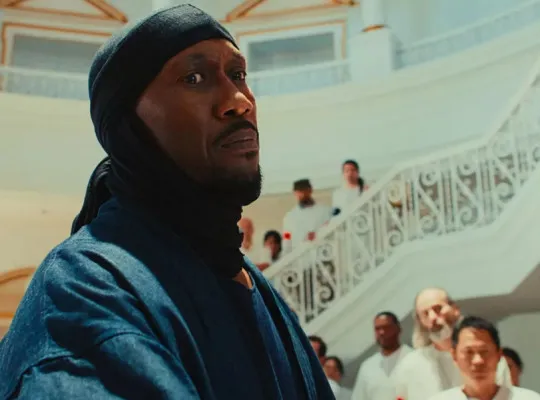
Winning an Academy Award is often considered one of the greatest achievements in an actor's career. However, Mahershala Ali believes that even Hollywood's most prestigious recognition does not guarantee a steady stream of meaningful acting opportunities.
The acclaimed actor, who has won two Oscars for Best Supporting Actor, recently discussed the challenges of finding worthwhile roles during an appearance on the 7PM in Brooklyn podcast.
Despite his impressive achievements, Ali admitted that he still struggles to find projects that offer the kind of characters and creative opportunities he wants to pursue.
His comments highlight a broader issue within the entertainment industry: critical acclaim and professional recognition do not necessarily translate into consistent employment.
Mahershala Ali Questions the Value of Winning an Oscar
During his conversation on 7PM in Brooklyn, Ali reflected on what winning an Academy Award actually means for an actor's long-term career.
The actor acknowledged the prestige associated with receiving Hollywood's highest honors but questioned whether those achievements fundamentally change the opportunities available to performers.
Ali has received two Academy Awards, an accomplishment that places him among a relatively small group of actors who have won multiple Oscars.
Nevertheless, he explained that these victories have not eliminated the challenges of finding suitable work.
His concerns are not simply about receiving more offers. Instead, he wants opportunities to portray compelling characters in projects that justify his participation.
According to Ali, the central problem is that the entertainment industry does not consistently produce enough strong scripts and meaningful roles for the number of talented actors seeking employment.
Even performers with established reputations must compete for a limited selection of worthwhile projects.
Even 17 Oscars Would Not Guarantee More Roles
One of the most striking moments from Ali's interview came when he imagined what his career might look like if he had won considerably more Academy Awards.
The actor suggested that even possessing 17 Oscars would not necessarily solve the problem.
His reasoning was straightforward: awards cannot create opportunities when suitable roles are not being written or developed.
If filmmakers and studios are not preparing projects with a particular actor in mind, that performer must continue searching for appropriate material regardless of their professional achievements.
Ali's hypothetical example emphasized the difference between recognition and actual employment.
An Academy Award can increase an actor's visibility, strengthen their reputation, and create new professional relationships.
However, it cannot guarantee that studios will finance projects suited to their talents.
The actor's remarks challenge the common assumption that winning major awards automatically places performers in a position where they can choose freely among desirable roles.
For Ali, the reality appears considerably more complicated.
Hollywood Has More Talented Actors Than Quality Scripts
Ali identified the shortage of compelling material as one of the industry's most persistent challenges.
Hollywood is home to an enormous number of talented performers, but the number of films and television productions offering substantial, interesting characters is much smaller.
The situation creates intense competition even among established professionals.
An actor may possess exceptional abilities, extensive experience, and widespread critical recognition without regularly encountering projects that make effective use of those qualities.
Ali suggested that the issue extends beyond individual casting decisions.
The problem also involves which stories are written, which screenplays attract financing, and which productions receive approval from studios.
A strong performance requires more than a talented actor. It also depends on a well-developed character and a production willing to invest in bringing that character to the screen.
Without those elements, professional recognition alone cannot sustain a fulfilling acting career.
His observations offer an interesting perspective on the relationship between creative talent and the business decisions that shape Hollywood.
Creating Your Own Projects Is Not a Quick Solution
One possible response to a shortage of suitable roles is for actors to develop their own productions.
Established performers increasingly participate in producing films and television series, allowing them to pursue material that might otherwise struggle to attract studio interest.
Ali acknowledged that this approach can provide greater creative control.
Instead of waiting for someone else to offer a role, an actor can help develop a screenplay, assemble a creative team, and seek financing.
However, he emphasized that producing an original project requires a considerable investment of time.
According to Ali, developing a film from its initial concept to the point where production can begin may take approximately three to five years.
The process involves numerous stages, including writing, revisions, financing, casting, and production planning.
Even when an actor is personally committed to a project, there is no guarantee that it will move forward quickly.
As a result, creating original material is not an immediate replacement for receiving acting offers.
For performers hoping to work consistently, the lengthy development process presents another significant obstacle.
Mahershala Ali Won His First Oscar for Moonlight
Ali's comments are particularly notable because of his extraordinary success during the 2010s.
He received his first Academy Award for Best Supporting Actor in 2017 for his performance in Moonlight.
Directed by Barry Jenkins, the critically acclaimed drama explores identity, family, and personal growth through different stages of its protagonist's life.
Ali portrayed Juan, an influential figure whose relationship with the central character becomes an important part of the story.
Although his screen time was relatively limited, his performance received widespread praise.
Moonlight also won the Academy Award for Best Picture, becoming one of the most celebrated films of its year.
Ali's Oscar victory significantly raised his profile within the industry and established him as one of Hollywood's most respected dramatic performers.
For many observers, the achievement appeared likely to open the door to an extensive range of major roles.
However, Ali's recent comments suggest that the opportunities following such recognition are not always as plentiful as audiences might expect.
His Second Academy Award Came With Green Book
Ali received his second Oscar for Best Supporting Actor in 2019 for Green Book.
Directed by Peter Farrelly, the film stars Ali as pianist Don Shirley opposite Viggo Mortensen as Tony Vallelonga.
The story follows the relationship between the two men during a concert tour through the American South in the early 1960s.
Ali's portrayal earned significant critical recognition and reinforced his reputation as a versatile dramatic actor.
Green Book also won the Academy Award for Best Picture.
With his second victory, Ali became the first Black actor to win the Best Supporting Actor Oscar twice.
The achievement represented another major milestone in his career.
Winning two Academy Awards within three years would ordinarily suggest that an actor had reached a position of exceptional professional influence.
Yet Ali's latest remarks demonstrate that even this level of recognition does not eliminate uncertainty about future work.
Marvel's Blade Reboot Became a Major Career Frustration
One of the most visible examples of the difficulties Ali has encountered is Marvel Studios' planned reboot of Blade.
The actor was announced as the new star of the franchise in 2019, generating considerable excitement among Marvel fans.
The project was intended to introduce a new version of the character previously portrayed by Wesley Snipes.
Ali's casting was widely regarded as an ambitious choice, particularly given his dramatic credentials and growing international reputation.
However, the film subsequently experienced a lengthy and complicated development process.
The production underwent changes involving directors, writers, and its broader creative direction.
Multiple attempts to move the project forward failed to produce a completed film.
As development continued, uncertainty grew over when audiences would finally see Ali portray the character.
The situation became a prominent example of the challenges facing major Hollywood productions, even when they involve recognizable intellectual property and acclaimed performers.
Why Blade's Development Problems Matter
The difficulties surrounding Blade are particularly relevant to Ali's broader comments about the entertainment industry.
Being attached to a major studio franchise does not necessarily mean that an actor will soon begin filming.
Large productions can remain in development for years while creative teams work through screenplay revisions, scheduling issues, and changes in studio priorities.
For an actor, these delays can complicate career planning.
A performer may remain associated with a high-profile project while still needing to pursue other opportunities.
In Ali's case, Blade has been one of the most widely discussed projects connected to his career since his second Oscar victory.
Yet the prolonged development process has prevented the film from becoming the major on-screen role initially anticipated.
The project illustrates how the industry's production decisions can affect even performers with substantial professional recognition.
It also reinforces Ali's argument that awards and reputation cannot guarantee the creation of suitable acting opportunities.
Mahershala Ali Has Built a Career Across Film and Television
Although Ali is best known for his Oscar-winning performances, his career includes a wide range of film and television projects.
He appeared in House of Cards, where his portrayal of Remy Danton brought him considerable attention.
He later played Cornell Stokes in Marvel's Luke Cage, demonstrating his ability to portray complicated antagonistic characters.
Ali also starred in the third season of HBO's True Detective, taking on the central role of Detective Wayne Hays.
His performance explored a character across multiple periods of his life and received critical praise.
In cinema, Ali has appeared in productions including Hidden Figures, Alita: Battle Angel, and Leave the World Behind.
He also provided the voice of Aaron Davis in Spider-Man: Into the Spider-Verse and its sequel, Spider-Man: Across the Spider-Verse.
These roles demonstrate his versatility across drama, science fiction, superhero stories, and animation.
However, Ali's latest interview suggests that maintaining a diverse filmography requires more than simply being recognized as a talented performer.
It also depends on the availability of scripts and filmmakers interested in developing substantial characters.
Does Winning an Oscar Still Change an Actor's Career?
Ali's remarks raise an interesting question about the practical value of major entertainment awards.
An Academy Award remains one of the most prestigious forms of recognition in filmmaking.
Winning can increase public visibility, attract media attention, and strengthen an actor's professional reputation.
For some performers, the recognition leads to larger productions, higher salaries, and opportunities to work with prominent directors.
However, these benefits are not guaranteed.
The entertainment industry operates through a complicated combination of artistic decisions, commercial expectations, production schedules, and financing.
A studio may admire an actor's abilities without having a suitable project ready for them.
Similarly, an acclaimed screenplay may struggle to secure funding or move into production.
Ali's experience illustrates the distinction between being highly respected and having a consistent supply of meaningful work.
His comments also suggest that the number of awards an actor possesses is not always the most important factor in determining their next opportunity.
The Challenges of Finding Meaningful Roles in Hollywood
For established actors, career decisions often involve balancing artistic ambition with the practical realities of employment.
Accepting every available project may provide more frequent work, but it does not necessarily lead to creatively satisfying performances.
Waiting for stronger material can be equally challenging, particularly when suitable scripts are limited.
Ali's remarks suggest that he remains focused on finding characters that offer substantial dramatic possibilities.
That approach is consistent with a career built around performances in critically acclaimed productions.
However, the actor's experience also demonstrates how much performers depend on the creative and financial decisions of other people.
Writers must develop interesting characters, producers must assemble viable projects, and studios must be willing to support them.
When any part of that process stalls, even highly regarded actors can find themselves waiting for their next significant opportunity.
Mahershala Ali's Comments Reveal a Different Side of Hollywood Success
Mahershala Ali's appearance on 7PM in Brooklyn offers a revealing perspective on the realities of working in Hollywood.
Despite winning two Academy Awards and appearing in numerous acclaimed productions, the actor says he continues to encounter a shortage of suitable roles.
He believes the central problem is not a lack of talented performers but a limited supply of strong scripts and projects that receive studio approval.
His suggestion that even 17 Oscars would not fundamentally change the situation emphasizes the limits of professional recognition.
Ali also acknowledged that developing original projects can provide greater creative independence, although the process may require three to five years.
The prolonged development of Marvel's Blade offers a particularly visible example of the uncertainty that can affect major productions.
Ultimately, Ali's comments highlight a fundamental distinction between receiving recognition for past achievements and securing opportunities for future work.
For one of Hollywood's most acclaimed contemporary actors, the challenge is not simply winning another award.
It is finding the next character and story worthy of his abilities.
Diğer haberler:



Yorumlar 0